
Union County Criminal History Checks
No single database holds a complete Union County criminal history. Begin with the question. A court outcome belongs in the Union County Public Index or at the clerk's counter. A present jail status belongs in the sheriff's custody portal. A statewide South Carolina name report comes from SLED CATCH. Incident narratives remain with the agency that wrote them. Use a full legal name, known spelling variants, and a date of birth when the official form accepts it. Those details help separate people who share a name.
A sound search moves from the narrow local source to the broader state source, then back to the originating office for proof. Index entries and portal results are leads. The clerk provides court documents, the arresting agency provides a releasable report, and SLED provides the repository product.
- Search Union County court cases by name or case number and identify the correct court division.
- Check current or past county custody using name, arrest date, release date, or holding agency.
- Order the South Carolina name-based report from CATCH when statewide coverage is needed.
- Check state prison and supervision systems separately because neither is part of the county jail search.
- Ask the record custodian for the underlying report, disposition, or certified copy when the result must be verified.
Union County's Four-System Record Search
Four official systems answer four different questions. The Union County Public Index tracks indexed court cases. Zuercher shows county custody data. CATCH compiles South Carolina criminal-history information reported to SLED. The SCDPPPS search covers current probation or parole supervision. A name absent from one system may still appear in another because the records have different owners, update cycles, and scopes.
| Channel | Best use | Main limit |
|---|---|---|
| Union Public Index | Filed charges, events, and dispositions | Not all municipal cases or document images appear |
| Zuercher custody portal | Union County booking and custody status | Not the officer narrative or final court outcome |
| SLED CATCH | Statewide South Carolina name report | No warrants or sex offender registry results |
| SCDPPPS Offender Search | Current probation and parole supervision | Prior-day data; former supervision may be absent |
Current supervision and federal custody require focused tools. The SCDPPPS offender search accepts valid combinations of name, SID number, county, and birth year.
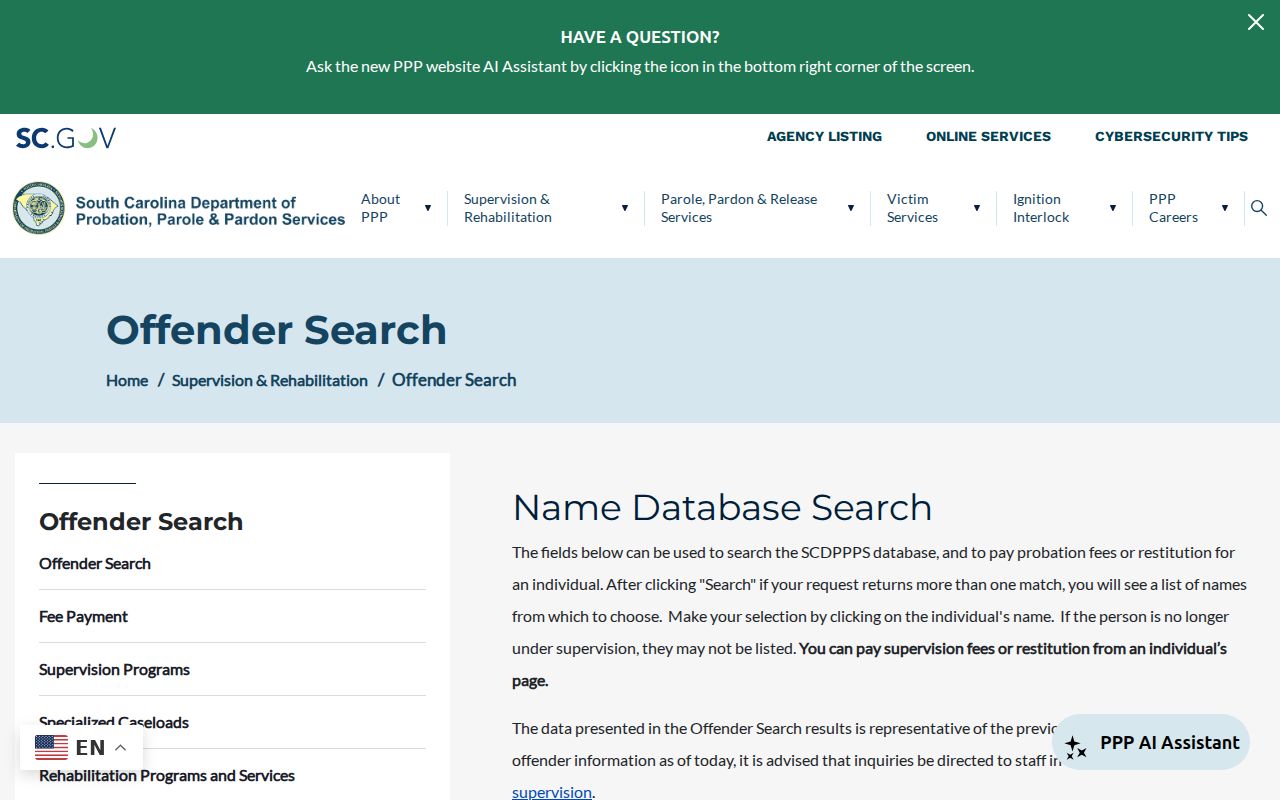
SCDPPPS data runs one day behind and may omit people whose supervision has ended. Federal custody sits outside every South Carolina system, so use the Federal Bureau of Prisons locator for that separate search.
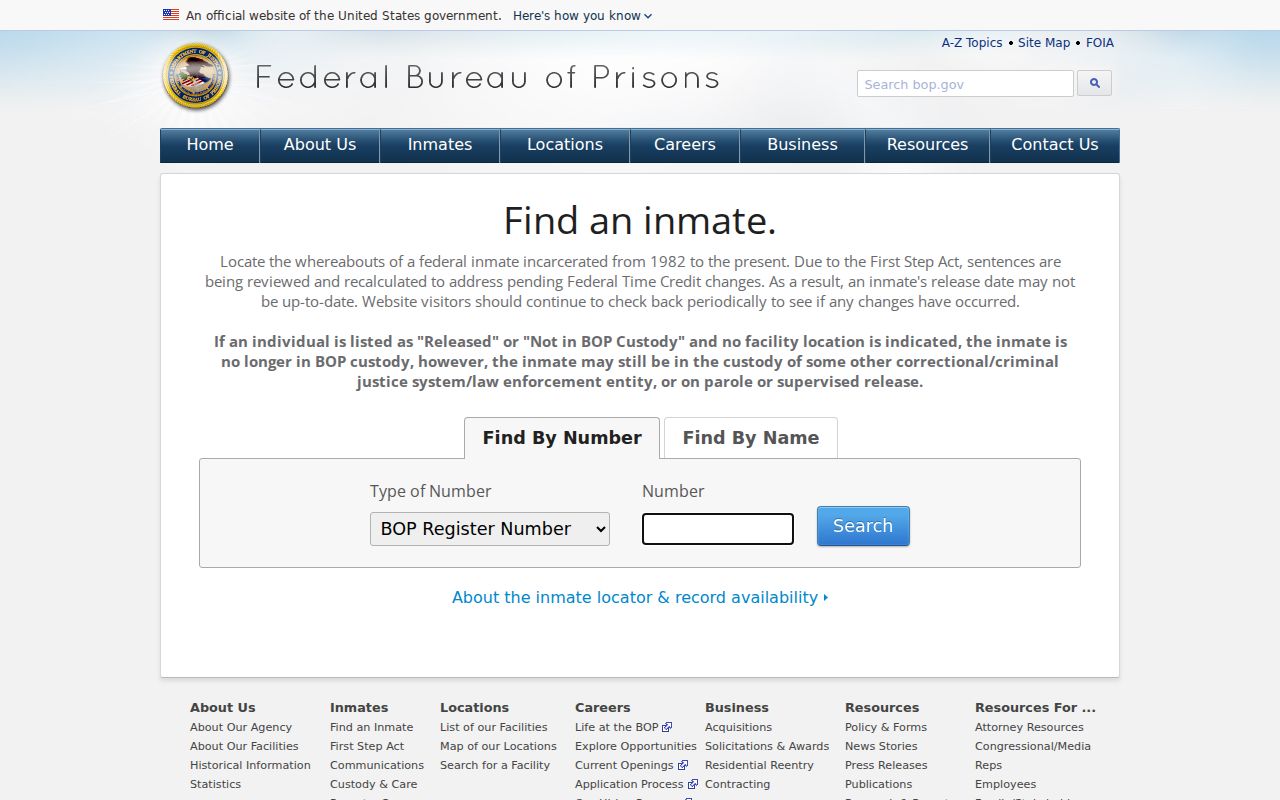
A federal result does not replace PACER for the court docket or identify local jail custody. This split is useful, not redundant. Each system documents a different stage, and an arrest entry, filed charge, and conviction are not interchangeable.
Official Background Checks in South Carolina
SLED's Citizens Access to Criminal Histories, known as CATCH, is the public statewide name-check product. Guest users can order a South Carolina-only report with a last name, first name, and date of birth. The search uses “starts with” matching. A Social Security number is optional and should never be guessed. The base report costs $25. CATCH posts a $1.43 online service charge for that product beginning July 1, 2026. A mail request avoids the online service fee and requires the prescribed payment and a self-addressed stamped envelope. The official SLED CATCH terms and fee screen shows the product before a search begins.
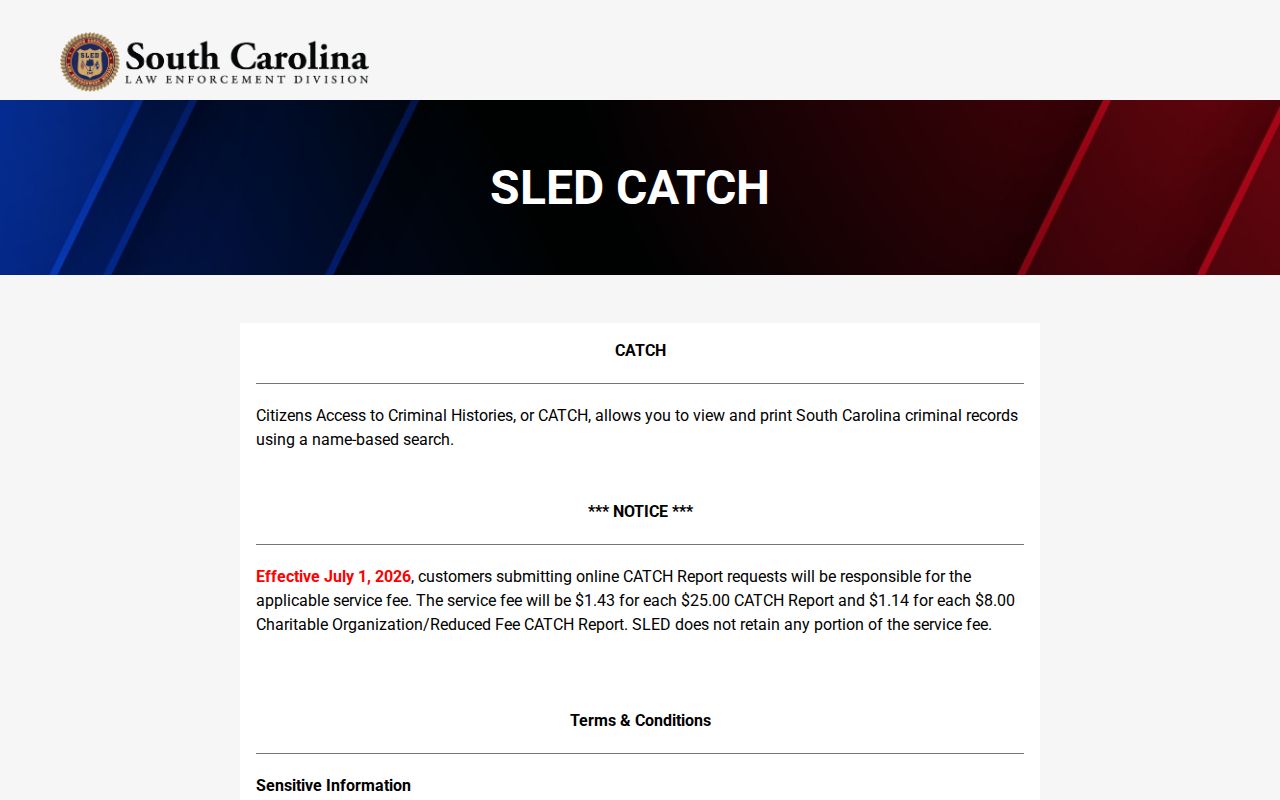
The screen makes clear that CATCH is a state repository check, not a Union County court-document viewer. The CATCH guest and account selection presents both entry routes.
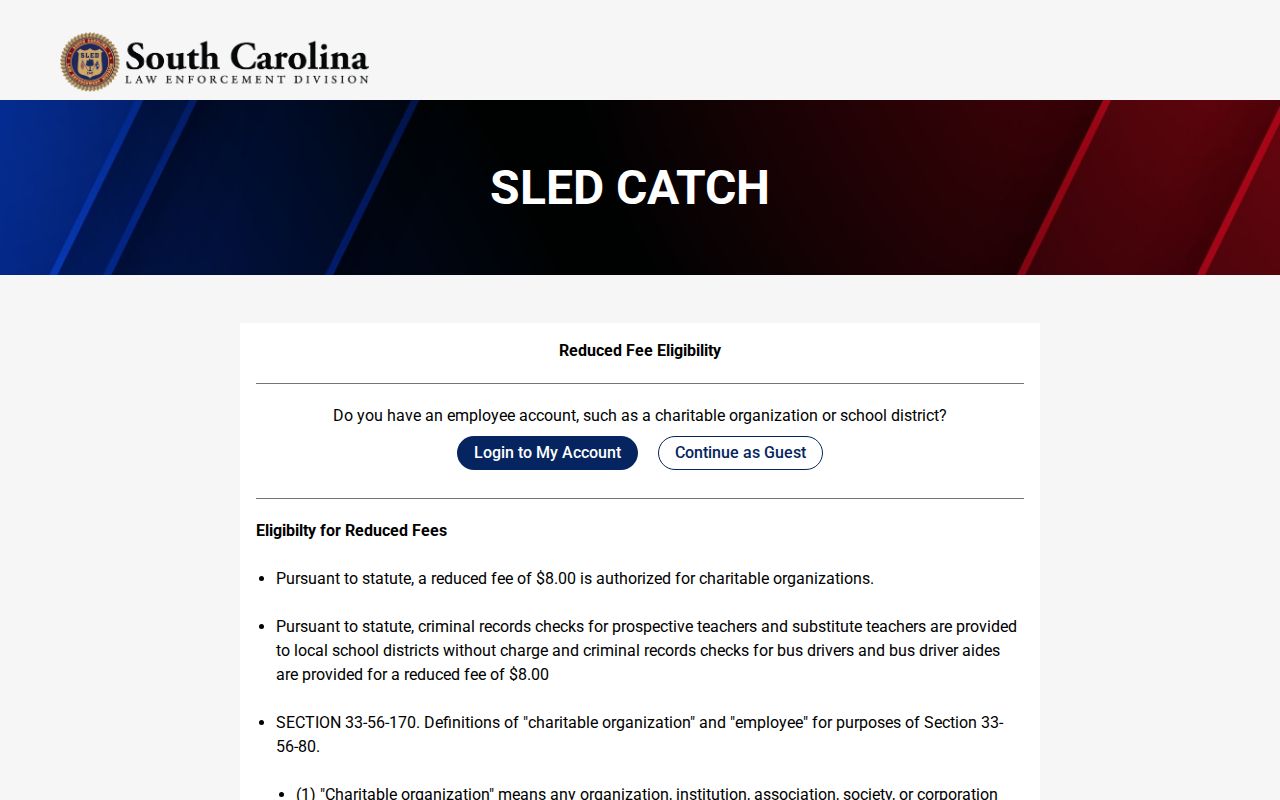
A member of the public can continue as a guest without creating a CATCH account.
Union County CATCH Search Limits
CATCH does not search wanted-person data or the South Carolina Sex Offender Registry. It can also produce a false match or miss an alias because the public search is name based. SLED says fingerprint comparison is more reliable, but the agency performs fingerprint checks only when a law authorizes or requires them. Correcting an error starts with SLED support and the final court disposition that proves the proper outcome. When an authorized process calls for prints, the IdentoGO South Carolina location finder is an appointment channel.
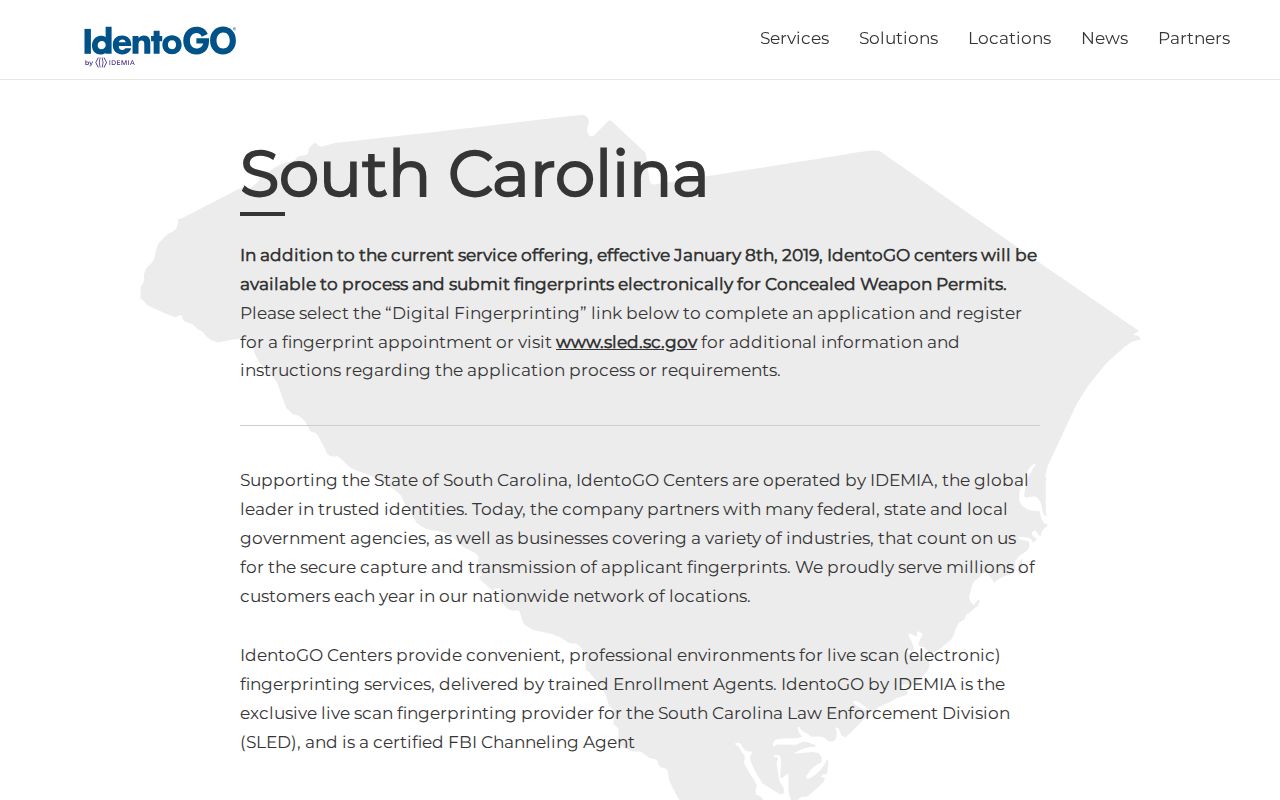
No stable official source confirmed an IdentoGO site inside Union County, so check the locator and current fee before traveling. A person seeking a national copy of their own FBI file can begin at the FBI electronic identity-history request portal.
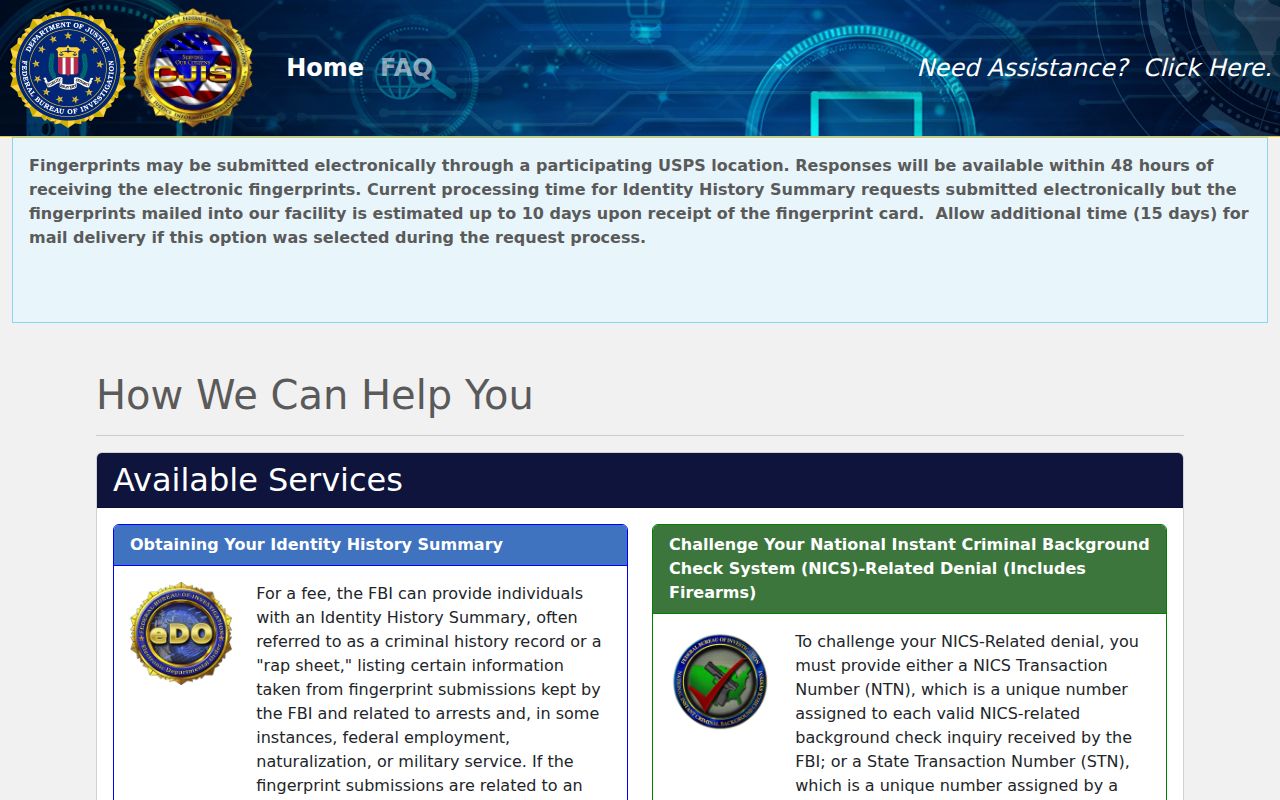
That subject-only process needs fingerprints and differs from both CATCH and Union County court records.
Kinds of Criminal Records
Union County agencies create distinct records as a matter moves from an incident to a final outcome. The arresting sheriff, city police department, Highway Patrol, or other agency writes the incident and arrest report. The detention center creates intake and custody data. A Magistrate, Municipal, or General Sessions court creates the judicial file. SLED receives covered fingerprints and disposition reports for the statewide repository.
- Incident and arrest reports describe the event, initial allegation, agency action, and releasable evidence details.
- Booking records show intake, custody, charge, holding agency, and release information, not guilt.
- Court case files track filed charges, hearings, pleas, motions, sentences, and disposition.
- Warrant records remain with the issuing court and executing agency; no verified public Union County list exists.
- Custody and supervision records divide among the county jail, SCDC, and SCDPPPS.
Registry information is another separate system. The South Carolina Sex Offender Registry Tool is conviction based and carries strict limits on misuse. Detailed local access routes appear in the Union County sex offender lookup.
Union County Public Index Gaps
The county Public Index is the strongest first stop for a General Sessions case, but it is not a universal clearance search. Union and Jonesville Municipal Courts were absent from the Judicial Branch's December 2025 list of participating municipal courts. If an expected city matter does not appear, call the municipal court. Also confirm that the result uses the correct division. “GS” marks General Sessions, while “CP” is Common Pleas and does not identify a criminal prosecution.
Case details can show status, parties, actions, financial entries, and document icons. Yet an absent image does not mean the paper does not exist. Save the case number, identify the filing, and ask the Union County Clerk of Court about a copy or certification. The index also requires cookies and JavaScript, and pop-ups may be needed for detail pages. Beginning in 2026, home addresses no longer display on public-index cases.
| Search field | Use | Format note |
|---|---|---|
| Case Number | Direct case lookup | Use the full local case identifier when known |
| Last Name | Required for the name route | Try the full legal spelling and known variants |
| First and Middle Name | Narrow common names | Both are optional filters |
| Case Type | Separate court divisions | General Sessions is the main higher criminal division |
| Date Range | Narrow by time | Availability depends on the search mode |
- Disposition
- The final result of a charge or case.
- Nolle prosequi
- A prosecutor's decision not to continue that charge at that time.
- True bill
- A grand jury returned an indictment; it is not a finding of guilt.
- Docket
- The chronological register of filings and court events.
Union County Criminal Records: What They Contain
The visible fields depend on the record. A justice-system criminal history may hold identity data, aliases, fingerprint transaction information, arrest cycles, and dispositions. Public products suppress protected identifiers. The court index gives richer procedural detail, while a jail result is most useful for current custody. A blank disposition can signal a reporting or matching gap rather than an open case.
| Name and identifiers | Legal name, aliases, date of birth, and limited descriptors; sensitive identifiers are not public-display fields. |
|---|---|
| Arrest and booking | Arrest date, contributing agency, booking details, custody, and the allegations recorded at intake. |
| Charges | Arrest charges may differ from the offense later filed by the prosecutor or returned by a grand jury. |
| Case events | Bond, indictment, pleas, hearings, motions, and other docket entries when recorded. |
| Disposition and sentence | Dismissal, acquittal, nolle prosequi, conviction, sentence, and reporting date as applicable. |
| Custody or supervision | Current jail, prison, probation, or parole status must be checked in the matching system. |
For the filed charge and outcome, rely on the court record. For an officer's account, request the incident report from the agency that created it.
Union County Custody and Supervision
The Union County Detention Center portal can be searched by name, race, sex, cell block, arrest date, holding agency, custody date, or release date. Results may show a photo, identifying details, cell block, arrest date, holding agency, and release date. The sheriff's detention line provides a same-day fallback. County custody should not be confused with an SCDC sentence or SCDPPPS supervision. The official SCDC search disclaimer defines the state-prison tool's limits.
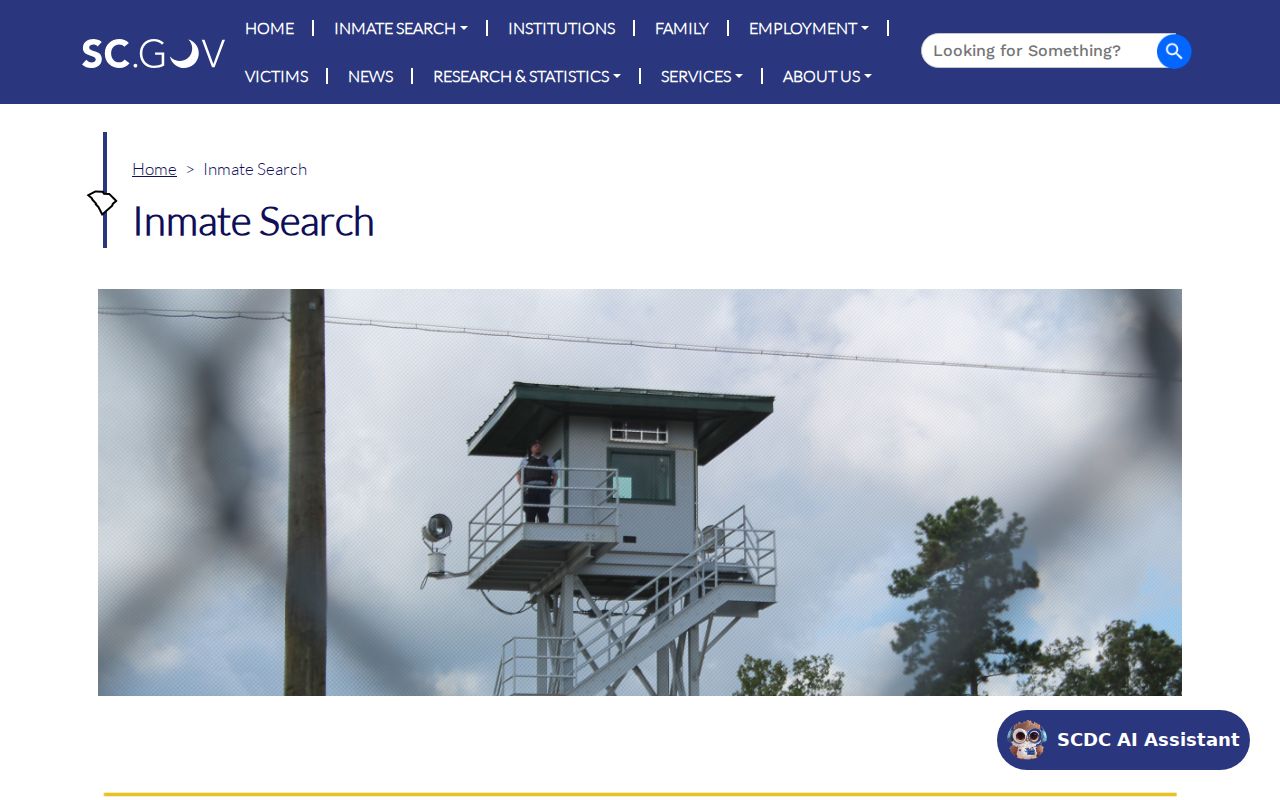
SCDC excludes released people, county-detention sentences, and community supervision. The separate SCDC inmate search interface displays public information for people currently sentenced to and incarcerated in state custody.
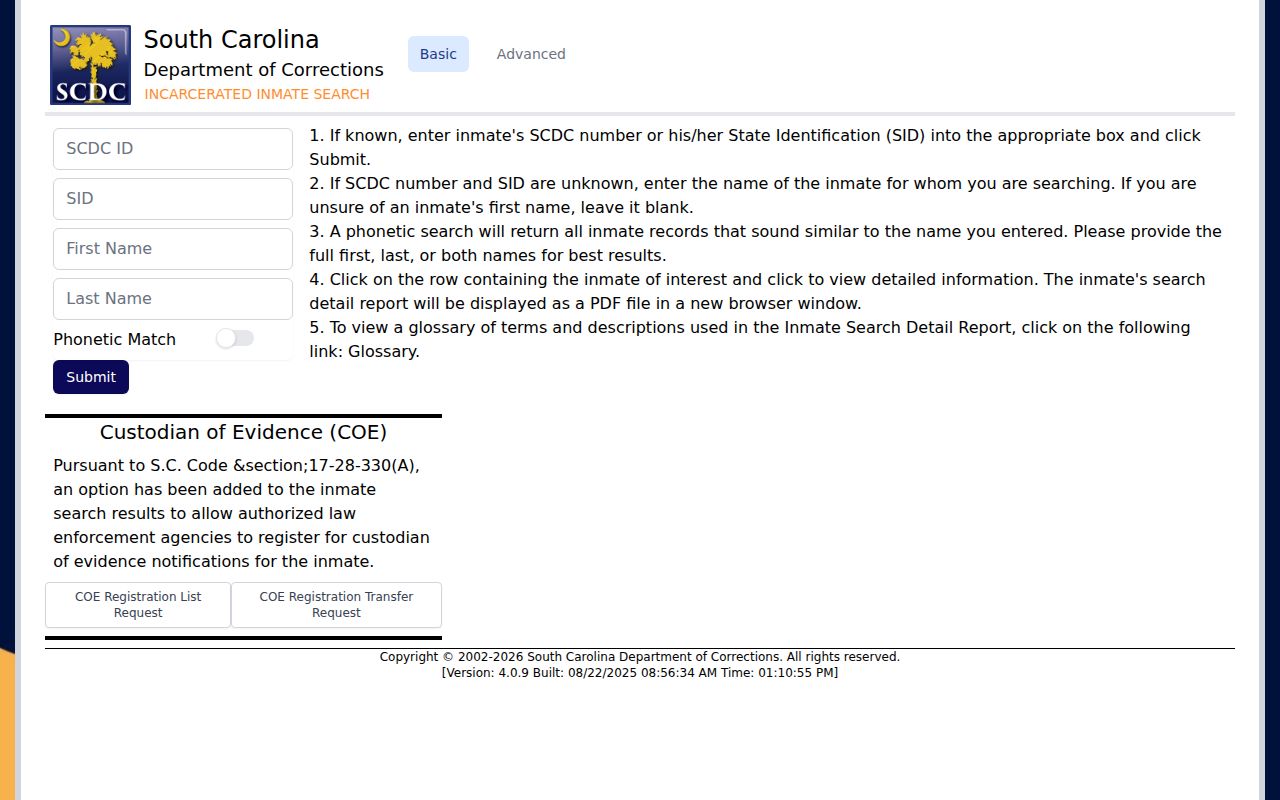
Its information is current as of midnight on the prior day, not a live Union County jail roster. Use the county portal or detention phone for local custody and the separate supervision system for probation or parole.
South Carolina Public Access Laws
The South Carolina Freedom of Information Act gives a right to inspect or copy nonexempt public records. It does not force an office to create a new analysis or release every part of a sensitive file. For newer records, a public body generally gives its initial determination within ten business days; older records generally receive a determination within twenty business days. Production follows on the statute's schedule. Reasonable actual-cost fees and a deposit of up to 25 percent may apply.
Key South Carolina laws:
S.C. Code §§30-4-30 and 30-4-40 set access, timing, fee, privacy, and law-enforcement exemptions.
S.C. Code §§23-3-115 and 23-3-120 govern public criminal-history dissemination and covered fingerprint submissions to SLED.
S.C. Code §17-1-40 requires destruction of arrest and booking records after qualifying outcomes, subject to exceptions.
Active-investigation material, confidential sources, protected personal data, juvenile information, and security-sensitive jail content may be withheld or redacted. Ask the custodian to cite the exemption for any withheld part. Body-camera footage follows separate rules under state law and is not simply an ordinary FOIA public record.
Union County Warrant Record Fallback
No verified public Union County active-warrant database or statewide South Carolina public warrant list was found. CATCH does not fill that gap. For one's own possible warrant, first identify the court that may have issued it. The Union County Sheriff's Office handles felony and misdemeanor warrants, while Magistrate Court issues arrest and search warrants. Union and Jonesville Municipal Courts are separate sources for their bench warrants.
- Call the issuing court or legal counsel and confirm the name, case, and warrant status.
- Contact the sheriff at 864-429-1612 for verification and current surrender or bond instructions.
- Call Magistrate Court at 864-429-1648 when the warrant or bond record arose there.
- Use Union Municipal Court at 864-429-1713 or Jonesville Municipal Court at 864-674-5746 for city matters.
Unserved or sealed warrants, juvenile matters, and investigative facts may not be released. An old unofficial list is not safe proof of current status. Obtain the court's written disposition after a warrant is cleared because distributed systems may take time to update.
Restricted, Sealed & Expunged Records
Juvenile files, victim and minor details, protected identifiers, medical data, and parts of active investigations do not receive ordinary public treatment. Sealed and expunged cases do not appear in the Public Index. South Carolina calls its clearing process expungement and implements relief through an Order for Destruction of Arrest Records. Eligibility depends on the charge, outcome, prior record, and statute.
An eligible General Sessions application begins with the Sixteenth Circuit Solicitor. A qualifying Magistrate or Municipal Court dismissal goes directly to that court. Obtain the final disposition and a current CATCH report first. The usual state fee stack for an eligible order can include a $250 solicitor fee, $25 SLED verification, and $35 clerk filing fee, for a typical $310 total. No-fee paths and other exceptions apply, so the exact route must be confirmed before payment.
- Confirm the outcome by getting the disposition from the court and reviewing a current CATCH report.
- Apply through the solicitor for eligible General Sessions matters or the lower court for qualifying summary cases.
- Allow SLED four weeks after receipt of the order, then run another check to verify removal.
- For a remaining entry, send SLED a certified true copy, a recent report, and a self-addressed stamped envelope.
A pardon is different and does not erase the public docket. Registry removal also has its own process and should not be confused with ordinary expungement.
Union County Criminal Record Counters
Union County records are distributed among several offices. Court documents belong with the clerk, incident reports with the arresting agency, and booking data with the detention center. Two official listings give different Main Street addresses for court functions, so call before travel and state the record needed. That small step can prevent a trip to the wrong counter.
Clerk of Court
Union County Courthouse
322 East Main Street
Union, SC 29379
864-429-1630
Sheriff's Office
200 East Main Street
Union, SC 29379
864-429-1612
Detention Center
1657 Jonesville Highway
Union, SC 29379
864-429-2818
Magistrate Court
210 West Main Street
Union, SC 29379
864-429-1648
A narrow written FOIA request should name the date range, location, agency, report or booking number if known, record type, and preferred format. The county provides a request form, but no current sheriff fee schedule was located. Ask for an advance estimate and a citation for each redaction.
Union County Records Since 1785
Union County's first court session took place in March 1785 at Alexander McDougal's home. Today's record path reflects two centuries of specialization. One event can produce an agency report at sheriff or city police, an intake record at the detention center, a bond or warrant entry at Magistrate Court, a General Sessions file at the courthouse, and a statewide arrest cycle at SLED.
That history helps explain why a one-box search cannot settle every question. The county courthouse, sheriff headquarters, detention center, and municipal courts keep records for different legal tasks. The Union County Museum's genealogy holdings and the Carnegie Library offer a separate path for historical family research, while modern criminal files remain with their official custodians.
Official SLED crime reports also need careful reading. They count reported incidents and offenses from agencies such as Union Police, the Union County Sheriff, and Jonesville Police. They are not lists of people and do not establish convictions. Case outcomes still belong in the matching court record.
City-by-City Criminal Records in Union County
Union, Jonesville, and Lockhart are the county's three largest incorporated places by the same 2020 Census vintage. Their record routes differ. The City of Union has Public Safety and Municipal Court, Jonesville has its own police department and municipal court contact, and Lockhart generally routes criminal-record questions toward town hall and county agencies because no separate local police-records portal was identified.
Union Record Check
Population 8,174 · Public Safety reports and nonparticipating Municipal Court records require direct local channels.
Jonesville Record Check
Population 852 · Police and court requests begin at the municipal complex on North Main Street.
Lockhart Record Check
Population 384 · Town Hall can route requests to the Union County sheriff and courts.
City arrest records can still lead to county custody and General Sessions files. Follow the agency report to Zuercher, then to the municipal, Magistrate, or General Sessions court that received the charge.